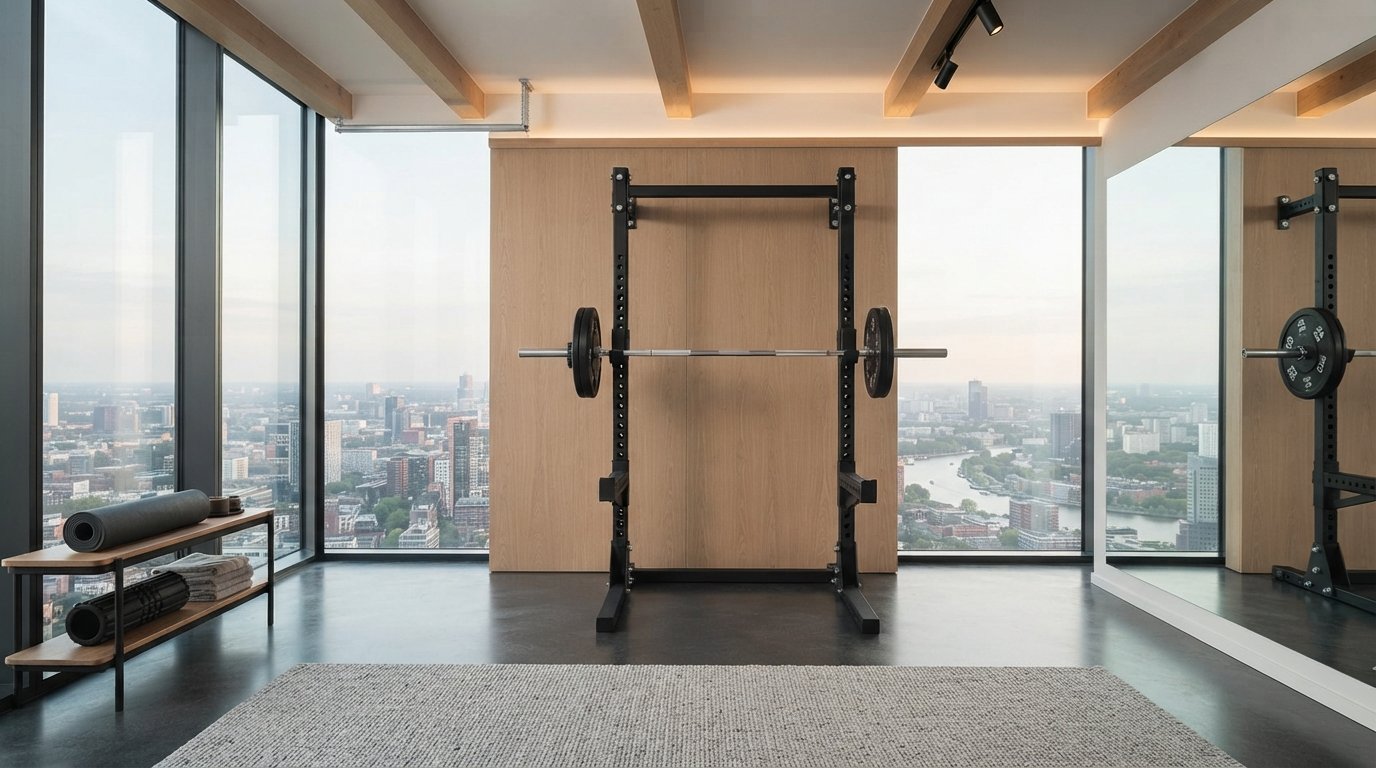
Having a fully equipped gym in your garage is a double-edged sword.
On one hand, you have zero commute and no excuses. On the other hand, the barbell is always staring at you. Every time you take out the trash, the iron is whispering your name.
For many home gym athletes, this leads to a dangerous cycle of overtraining. Because the gym is so accessible, they lift 6 or 7 days a week, never giving their central nervous system time to recover. Eventually, they hit a wall: weights feel heavier, sleep suffers, and the motivation to train vanishes completely.
Here is how you protect your mind and body from home-gym burnout.
1. Implement Forced Rest Days
When the gym is a commercial building 15 minutes away, a “rest day” is easy. You just don’t drive there. When it’s in your house, you have to be intentional. Pick two days a week where you are absolutely forbidden from touching a weight. Use those days for a walk, mobility work, or completely ignoring fitness.
2. Have a clear “Start” and “Stop” Ritual
When you train at home, the lines between life and the gym blur. Create a ritual. When you walk into the garage, change your shoes, put on your gym playlist, and turn on the specific gym lights. When the workout is over, turn off the music, turn off the lights, and shut the door. The gym is now closed.
3. Program Deload Weeks
You cannot go 100% intensity 52 weeks a year. Every 4 to 6 weeks, schedule a “deload” week. Cut your total volume (number of sets) in half, and drop the weight by 20%. The goal is to stimulate the muscles, not annihilate them. You will come back the following week stronger than ever.
Respect the iron, but respect the rest even more.