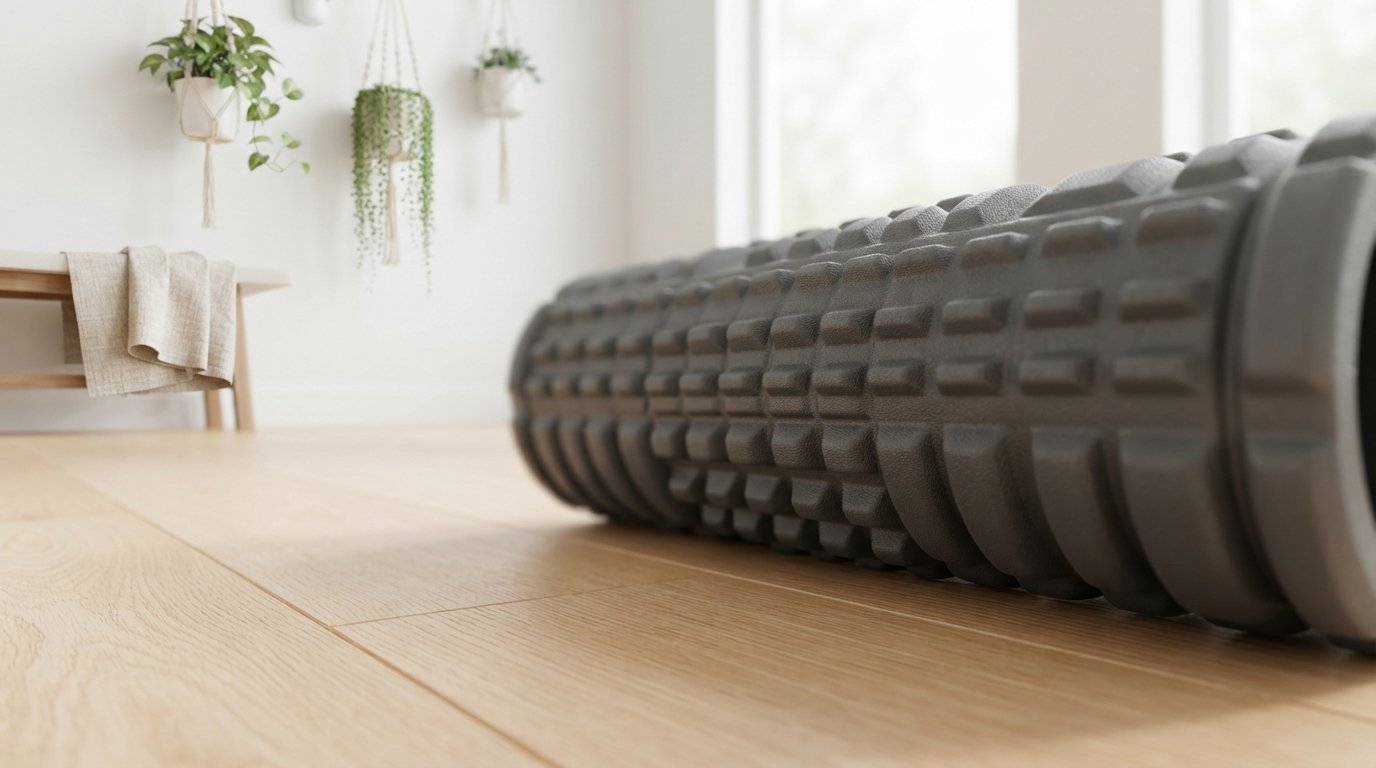
In the early 2010s, foam rolling was treated like magic. Athletes would spend 30 minutes rolling around on the floor before and after every workout, wincing in pain, believing they were “breaking up scar tissue” and lengthening their muscles.
Then, the science caught up.
Is your $40 vibrating foam roller actually a crucial piece of recovery equipment, or is it a massive waste of time? Here is the brutal truth.
What Foam Rolling DOES NOT Do
- It does not break up scar tissue or “fascia.” Fascia is as strong as kevlar. It takes hundreds of pounds of focused pressure to physically deform it. A piece of foam is not altering your structural anatomy.
- It does not lengthen your muscles. Only eccentric loading and deep stretching can physically increase muscle length over time.
What Foam Rolling ACTUALLY Does
Foam rolling is a neurological hack. The pressure of the roller sends a signal to your brain and central nervous system that it is “safe” to relax the tension in a specific muscle group. This provides a temporary increase in range of motion (usually lasting 10-15 minutes) and a temporary reduction in the perception of pain.
The Verdict: How to Use It Correctly
Foam rolling is not useless, but you shouldn’t spend 20 minutes doing it.
Use it as a 2-minute neurological primer. If your quads are extremely tight and restricting your squat depth, spend 60 seconds rolling them out. Use that temporary window of increased mobility to get under the barbell and squat deep. The loaded movement of the squat is what will actually “fix” your mobility permanently.
Stop rolling for an hour. Roll for 2 minutes, and then go lift heavy things.