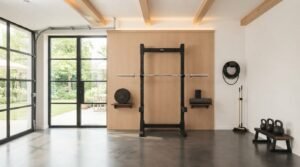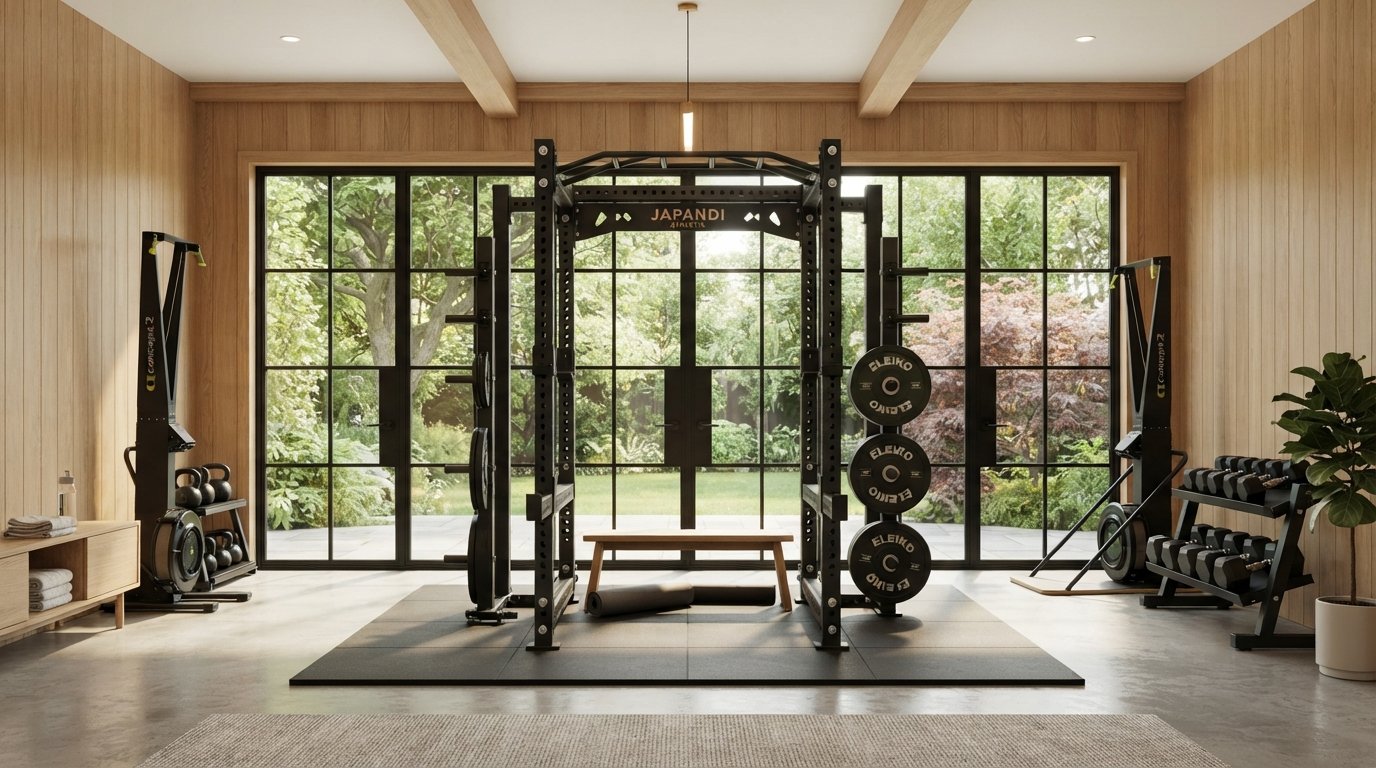
The power rack is the beating heart of the garage gym. It is where you will squat, bench, pull-up, and grind through the hardest sets of your life. It is also your primary safety mechanism when training alone.
Buying a rack is the most expensive and permanent decision you will make for your home gym. If you buy the wrong one, you will be stuck with a wobbly, unsafe, incompatible metal cage for years.
Here is exactly what you need to look for when choosing the perfect power rack.
1. Steel Gauge and Upright Size
The thickness of the steel determines the stability and weight capacity of the rack.
- Avoid: 14-gauge steel. It is thin, flimsy, and meant for cheap sporting goods store racks.
- The Gold Standard: You want 11-gauge steel. For the upright dimensions, look for 2×3 inch or 3×3 inch uprights. A 3×3, 11-gauge steel rack is virtually bomb-proof and will handle 1,000+ lbs without flinching.
2. Hole Spacing
When you are setting your safety pins for the bench press, a one-inch difference in pin height can mean the difference between choking yourself and hitting a PR.
- Westside Hole Spacing: This is a premium feature you should look for. It means the holes in the bench-press zone are spaced exactly 1-inch apart, allowing you to fine-tune your safety pins and J-cups perfectly.
3. Ecosystem and Attachments
Your rack is not just a squat stand; it is a modular ecosystem. If you buy a cheap rack with weird upright dimensions (like 2×2.5 inches), you will never be able to buy attachments for it. If you buy a standard 3×3 rack with 5/8″ or 1″ holes from a major brand (like Rogue, Rep Fitness, or Titan), you can add dip stations, cable pulleys, and lever arms later as your budget allows.
4. Depth and Footprint
Measure your garage carefully.
- If space is tight, a 24-inch depth rack gives you just enough room to squat inside the cage without taking up the whole room.
- If you have the space, a 30-inch or 36-inch depth gives you plenty of breathing room.
The Verdict: Don’t buy a cheap rack twice. Save your money, invest in an 11-gauge, 3×3 power rack with Westside hole spacing, and you will never need to upgrade again.