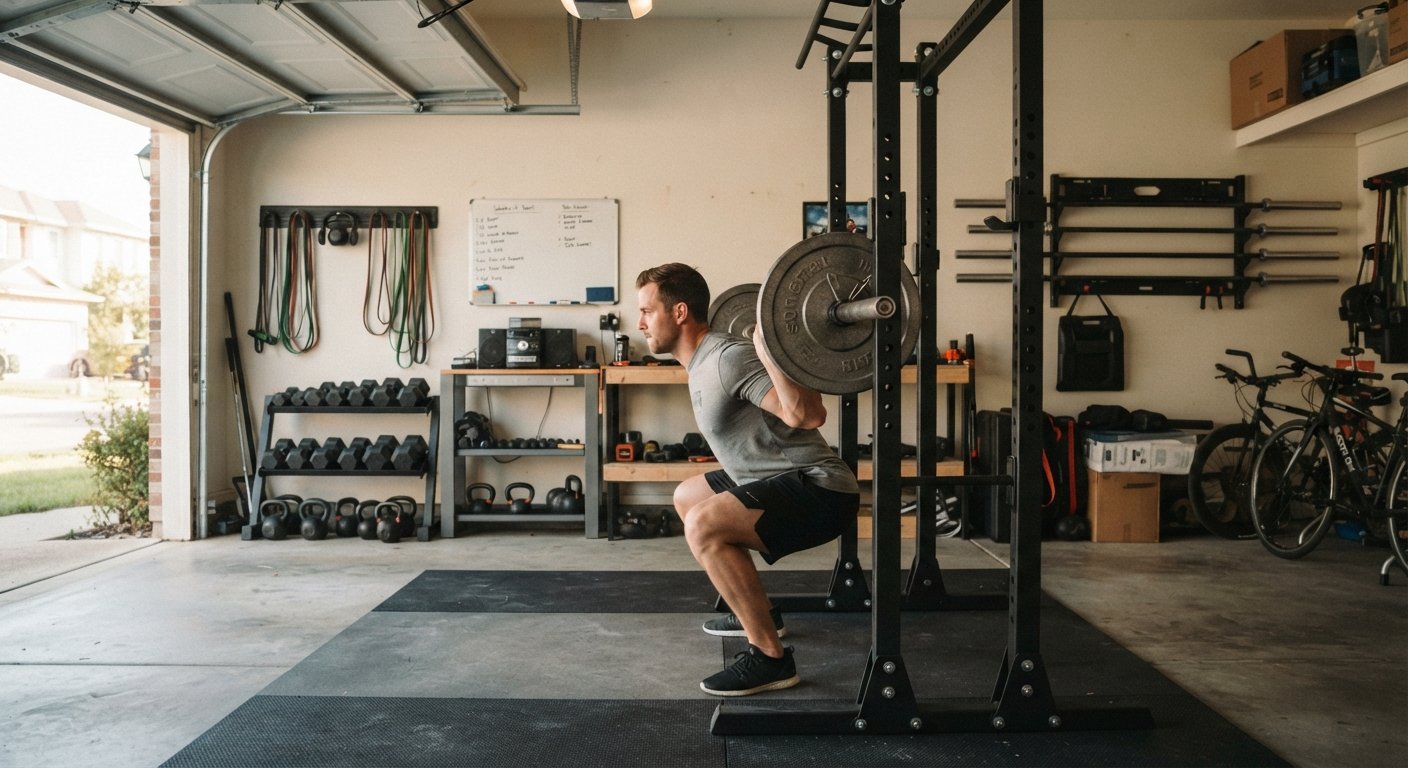
The commercial fitness industry has relied on a very specific, highly lucrative business model for the last fifty years: sign up thousands of people for cheap monthly memberships, lock them into predatory annual contracts, and rely on the statistical probability that 80% of them will stop showing up after February.
But over the last five years, a massive cultural shift has occurred. The home gym is no longer a dusty treadmill in a basement; it is a booming, multi-billion dollar industry. High-end equipment manufacturers are experiencing record profits, while massive commercial gym chains are scrambling to retain their memberships. Here is why the garage gym revolution is permanently disrupting the fitness landscape.
The Evolution of Residential Equipment
A decade ago, if you wanted to lift heavy weights at home, your only option was to buy flimsy, wobbly sporting-goods-store equipment that felt unsafe with anything over 200 pounds.
Today, companies like Rogue Fitness, Rep Fitness, and Titan are manufacturing true commercial-grade equipment specifically dimensioned for residential spaces. You can now buy an 11-gauge steel power rack with laser-cut numbering and heavy-duty safety straps that is engineered to fit perfectly under an 8-foot garage ceiling. The quality gap between a commercial facility and a residential garage has been completely erased.
The True Cost of Commuting
People are finally doing the math on the hidden costs of commercial gyms. A $50 monthly membership seems cheap, until you calculate the value of your time.
If it takes 20 minutes to drive to the gym, and 20 minutes to drive home, that is 40 minutes of unpaid commuting every single session. If you train four days a week, you are spending over 130 hours a year just sitting in your car to go lift weights. When athletes realize they can reclaim over a hundred hours of their life every year simply by lifting in their driveway, the upfront cost of a barbell and rack becomes irrelevant.
The Peace of the Iron Sanctuary
Commercial gyms are increasingly crowded, chaotic environments. Between waiting twenty minutes for a squat rack, navigating around teenagers filming TikTok dances, and dealing with broken equipment, the commercial gym often induces more stress than it relieves.
The garage gym offers absolute autonomy. You control the music. You control the temperature. You never wait for a machine. It is a private sanctuary where you can scream, drop weights, and focus purely on your physical progression without any external distractions.
GarageGymHub Takeaway: The initial investment might seem steep, but building your own training sanctuary is the ultimate investment in your long-term health and consistency.